
Manage complexity with ease. Discover how to master Digital Project Management in 2026 using Agile, Scrum, and AI tools to lead high-performance remote teams.
The Evolution of Project Leadership
In the professional landscape of 2026, the traditional image of a project manager with a clipboard and a physical whiteboard is a memory of the past. As work has become increasingly decentralized and global, Digital Project Management (DPM) has evolved into a high-stakes discipline that combines technical savvy, psychological insight, and extreme agility. Leading a project today isn’t just about meeting deadlines; it’s about managing flow in a world of constant digital interruption and AI-driven acceleration.
At Avanza Pro, we have seen that the most successful projects in 2026 aren’t those with the most resources, but those led by professionals who understand how to apply Agile and Scrum methodologies within a remote-first context. Whether you are leading a small startup team or a massive corporate initiative, mastering these frameworks is the key to delivering value faster and with higher quality.
1. Agile and Scrum: The Foundations of Modern Delivery
While “Agile” is a philosophy, “Scrum” is the most popular framework used to implement that philosophy. In 2026, these concepts have matured beyond software development and are now applied to marketing, HR, and even legal departments.
-
The Agile Philosophy: It prioritizes individuals and interactions over processes, and responding to change over following a rigid plan. In a volatile 2026 market, agility is a business’s primary defense mechanism.
-
The Scrum Framework: Scrum breaks down large, complex projects into manageable chunks called “Sprints” (usually 1 to 4 weeks). This iterative approach allows for constant feedback and course correction, ensuring the final product actually meets the user’s needs.
2. Managing the “Remote-First” Dynamics

In 2026, the “Office” is a software stack, not a building. Digital Project Managers must navigate unique challenges that didn’t exist in traditional environments:
I. Asynchronous Communication
The most effective managers in 2026 have moved away from “Meeting Culture.” Instead of a 1-hour Zoom call for every update, they use asynchronous tools (like recorded video briefs or collaborative documents) to protect the team’s “Deep Work” hours. Meetings are reserved for high-level strategy and complex problem-solving.
II. Transparency through Digital Twins
Modern projects now utilize a “Digital Twin”—a real-time, virtual representation of the project’s health. Using advanced dashboards, every team member can see the status of every task, bottleneck, and dependency without needing to ask. This “Radical Transparency” reduces friction and eliminates the need for constant status reports.
3. The Role of AI in Project Management (AI-PM)
The biggest change in 2026 is the integration of AI as a “Co-Pilot” for the Project Manager. AI is no longer a tool you use; it is a member of the team.
| AI Capability | Impact on Project Management |
| Predictive Scheduling | AI analyzes historical data to predict if a sprint is likely to be delayed before it even starts. |
| Automated Documentation | Meetings are automatically transcribed, summarized, and turned into actionable tasks in the project board. |
| Resource Optimization | AI suggests the best person for a task based on their current workload, skill set, and past performance. |
| Risk Mitigation | Real-time sentiment analysis of team communication can flag “burnout risk” or team misalignment early. |
4. Key Rituals of the Digital Scrum Master
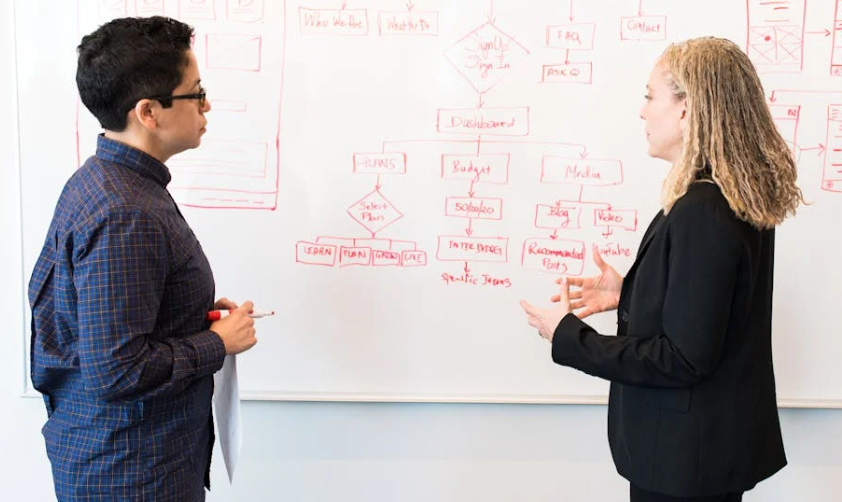
To maintain momentum in a remote environment, the “Scrum Rituals” have been adapted for the 2026 professional:
-
The Digital Daily Stand-up: Often done via a Slack bot or a quick video thread. It focuses on three questions: What did I do? What will I do? What is blocking me?
-
Sprint Planning: A collaborative session using virtual whiteboards (like Miro or FigJam) where the team commits to a set of deliverables for the next cycle.
-
The Sprint Review: A demo of the “Done” increment to stakeholders, ensuring everyone is aligned on the value delivered.
-
The Retrospective: The most critical ritual for growth. The team discusses honestly what went well and what could be improved, fostering a culture of continuous learning.
5. Overcoming the “Hybrid Trap” and Burnout
As a Project Manager in Avanza Pro, your most valuable resource is your team’s energy. In 2026, the risk of digital fatigue is at an all-time high.
-
Cognitive Load Management: Avoid “Feature Creep”—the tendency to add more tasks as the project progresses. Keep the scope lean and the focus sharp.
-
Work-Life Integration: Promote a culture where “offline” means offline. In a globalized world where someone is always working, the manager must set the standard for digital boundaries.
-
Psychological Safety: Remote teams thrive when people feel safe to voice concerns or admit mistakes early. Without physical cues, the manager must work twice as hard to build trust through consistent, empathetic communication.
Leading in the Era of Uncertainty
Digital Project Management is no longer about “command and control.” In 2026, it is about “facilitate and empower.” The role of the manager has shifted from being a taskmaster to being an architect of environments where talented people can do their best work.
By mastering Agile and Scrum and embracing the AI-driven tools of 2026, you are positioning yourself as a leader who can navigate any crisis and deliver results in any environment. At Avanza Pro, we believe that those who can manage complexity with clarity are the ones who will shape the future of the global economy. The tools are here, the frameworks are proven—it’s time to lead.