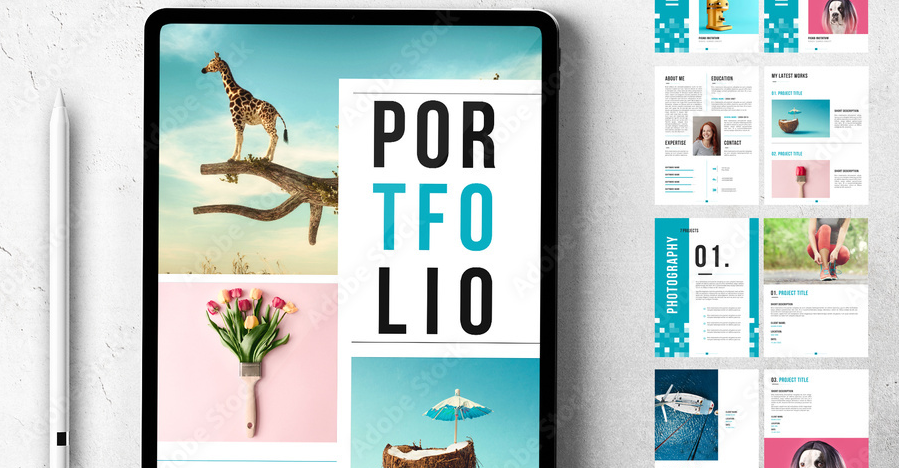
The PDF resume is dead. Discover the new rules of the Digital Portfolio 2.0 in 2026 and learn how to showcase your “Proof of Work” and AI skills to land your dream role.
The Death of the Static PDF
For decades, the standard gateway to a professional career was a two-page PDF resume. You listed your education, your previous job titles, and a few bullet points describing your duties. However, as we navigate through 2026, that format has lost its power. In a world where AI can draft a perfect-looking CV in seconds, recruiters and hiring managers have stopped looking at what you say you can do. Instead, they are looking for what you can prove.
We have officially entered the era of Digital Portfolio 2.0. At Avanza Pro, we define this not as a simple collection of links, but as your “Professional Proof of Identity.” It is a living, interactive ecosystem that showcases your problem-solving process, your technical mastery, and your ability to collaborate with Artificial Intelligence. If you want to stand out in the 2026 job market, your portfolio must be more than a gallery—it must be a strategic narrative.
The Three Pillars of the 2.0 Portfolio
To build a portfolio that actually converts visitors into job offers, you must anchor your digital presence on these three fundamental pillars of modern work.

Pillar 1: Proof of Work (The “Show, Don’t Tell” Rule)
In 2026, companies are moving toward Skills-Based Hiring. According to recent industry reports, over 90% of organizations now prioritize demonstrable competencies over traditional degrees.
-
The Case Study Approach: Instead of just showing a final result, your portfolio must document the process. Why did you choose that specific technology? What was the biggest obstacle, and how did you pivot?
-
Quantifiable Outcomes: Every project should lead to a “So What?” factor. “I built a website” is weak. “I architected a conversion-optimized interface that increased user retention by 22% in three months” is a 2.0 statement.
Pillar 2: AI-Augmented Fluency
In 2026, hiring managers aren’t just looking for human talent; they are looking for “Augmented Professionals.” Your portfolio must demonstrate that you know how to use AI to 10x your output and quality.
-
The Collaboration Log: Include a small section in your case studies explaining which AI tools you used (e.g., Cursor for coding, Midjourney for assets, or Gemini for strategy) and, crucially, how you audited and refined the AI’s output.
-
Critical Thinking: Show that you are the “Human-in-the-Loop.” Prove that you can identify AI errors and add the creative “soul” that machines still lack.
Pillar 3: Cognitive Hierarchy and User Experience
A recruiter spends an average of 6 to 10 seconds on your portfolio before making a decision. In 2026, your portfolio is your first test of UX design, regardless of your field.
-
Scannability: Use clean typography, ample white space, and bold headings that allow a human brain (and an ATS scanner) to find the most important information instantly.
-
Mobile-First Reality: Over 60% of professional profiles in 2026 are first reviewed on mobile devices during commutes or quick meetings. If your portfolio doesn’t look stunning on a phone, it doesn’t exist.
Selecting Your Engine: The 2026 Platform Guide
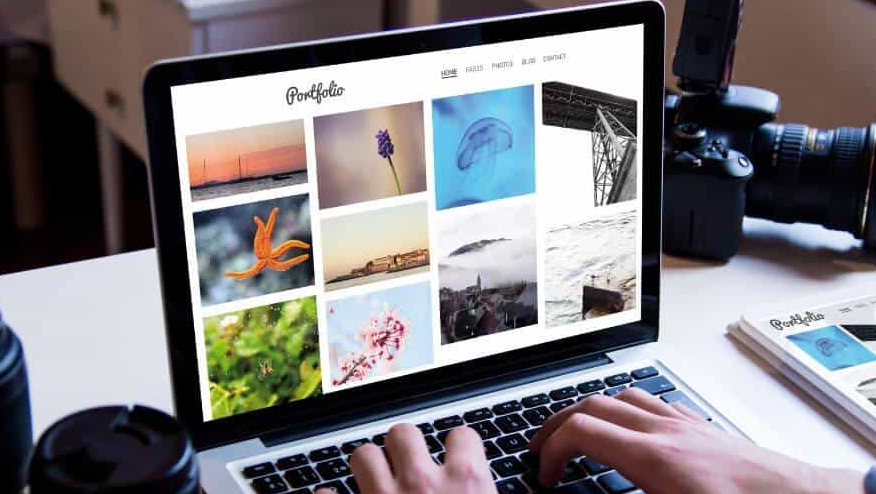
Not all platforms are created equal. Your choice of “where” to host your portfolio sends a subtle signal about your technical level and professional intent.
| Objective | Recommended Platform | Why it works in 2026 |
| High-End Design & Interaction | Framer / Webflow | These are the industry standards for high-fidelity, interactive sites. They signal that you are at the cutting edge of modern web design. |
| Process Documentation & Case Studies | Notion | Ideal for analysts, project managers, and writers. It’s clean, organized, and emphasizes your ability to structure information. |
| Developer Proof of Concept | GitHub + Custom Domain | For engineers, your code is your portfolio. Using GitHub Pages with a custom URL shows that you understand deployment and open-source collaboration. |
| Creative Networking | Behance / Adobe Portfolio | Best for visual artists and illustrators who want to be “discovered” within a massive global community of creatives. |
The Evolution Roadmap: Building Your Portfolio in 4 Phases
Building a 2.0 Portfolio doesn’t have to be overwhelming. At Avanza Pro, we recommend following this evolutionary sequence:
-
Phase 1: The Inventory: Audit your last 24 months of work. Select only the top 3-5 projects that align with the future career you want, not just the one you have now.
-
Phase 2: Narrative Construction: For each project, write a “Problem-Solution-Result” (PSR) story. Focus on the human impact of your technical choices.
-
Phase 3: The AI Integration: Revisit your projects and identify where you can highlight your AI workflow. This is what makes your portfolio “future-ready.”
-
Phase 4: The Bridge: Connect your portfolio to your LinkedIn and your “Digital Footprint” (your blog or newsletter). Use a QR code on your traditional (minimalist) CV to bridge the physical and digital worlds.
A Living Asset for an Unpredictable World
In the high-velocity economy of 2026, your career is no longer a ladder; it is a portfolio of projects. Your digital portfolio 2.0 is not something you “finish” and forget. It is a living asset that grows as you grow. It is your most powerful tool for negotiation, your best evidence for a promotion, and your shield against the automation of routine tasks.
At Avanza Pro, we believe that those who own their narrative own their future. Stop waiting for someone to read your resume. Start building the proof that you are the professional the world needs today. Your skills travel with you—make sure they have a home that does them justice.